This talk will explore how skin-to-skin contact, baby carrying and in-arms carrying support connection, breastfeeding and elimination communication.
Through a poetic lens, it will invite participants into babies’ subtle communication and the instinctive behaviours triggered and supported by touch.
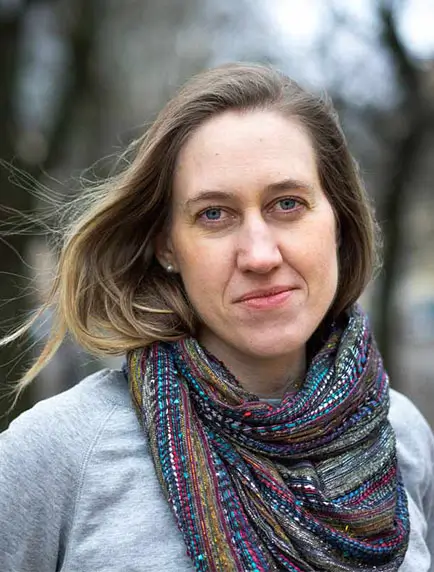
Ulrika Casselbrant is a baby carrying consultant and Certified Breastfeeding Specialist. She is the author of books on baby carrying, breastfeeding and Elimination Communication, including Babywearing and In-arms Carrying (2022) and A Little Book About Breastfeeding in the NICU (2023), a resource used in neonatal care and translated into multiple languages.
Ulrika works as a NICU nurse assistant at Karolinska University Hospital in Sweden and is involved in education, quality improvement and the development of breastfeeding and feeding support in neonatal care. Her special interests include Kangaroo Care, Family-Centered Care and infant communication. She also holds a Master’s degree in Fine Arts.

In human childrearing, carrying an infant on one’s body—holding in the arms and carrying on the back, or babywearing—is a practice that has developed in its own way across the world, bound up with each region’s daily life, labour, climate, and tools. In Japan, onbu (a high back carry) has long been widely used as a way of combining work and everyday life with childcare on one and the same body, and tools suited to the local environment have been devised—such as the mokko of Amakusa in Kumamoto, or the kooi-obi (child-carrying sash) of Izumo. These take forms different from those of other regions, yet each is one shape of childrearing’s adaptation to the environment of its society.
In this lecture, I approach Japanese holding and onbu from the standpoint of ecological psychology—the reciprocal exchange between perception and environmental information. First, drawing on continuous 24-hour behavioural records of contemporary households (firstborn newborns), I show how an infant spends a substantial part of the day in someone’s arms, and how, within the flow of evening life, family members pass the infant from one to another—what I will call the “relay of holding”—so that a shared, collaborative form of care takes shape. Second, through motion analysis, I show how differences in the structure of carrying tools, and in the freedom afforded by cloth, give a certain range to the closeness, the movements, and the direction of gaze between caregiver and infant.
What these data show is not an infant who is merely carried, but one who—supported by the caregiver’s body and by tools—shares in the caregiver’s movements and postural adjustments, and actively picks up information from the environment. In particular, the onbu arrangement of “looking the same way” over the caregiver’s shoulder bodily creates a place in which caregiver and infant share the world.
Babywearing—through which an infant comes to engage with several caregivers within the home, and to perceive the environment from the same viewpoint as the caregiver—is, for the infant, more than a means of transport. It can be understood as a first step into society: becoming aware of a world shared with others, beginning with the family, and actively joining it.
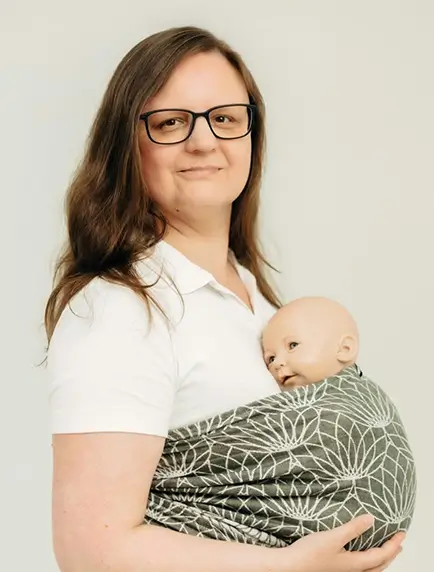
Through over twenty years of practical experience combined with the increas of medical knowledge among Polish babywearing consultants we significantly redefined our approach to carrying patterns, infants’ sensory needs, and parental health support.
My presentation discusses the key areas of transformation that have taken place in recent years:
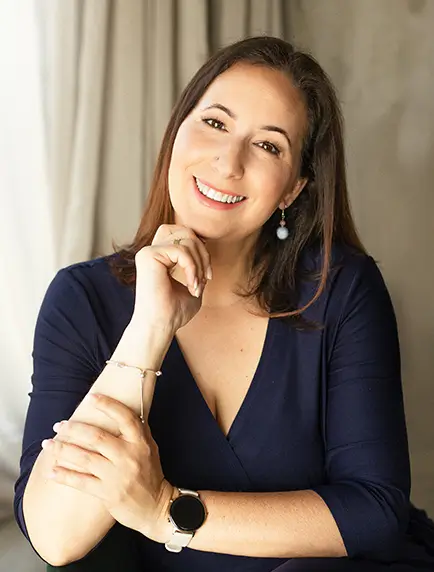
Working as a babywearing consultant for nearly two decades, Marta Alabrudzińska has witnessed firsthand the dynamic evolution of close-contact parenting. She remembers the early wave of enthusiasm surrounding babywearing and experienced the bloom of the community among both parents and wrap manufacturers. Now she has her contribution to what we know about babywearing in Poland.
Over time, her approach underwent a major transformation. As she learned more about infant development, needs, and capabilities, she shifted her focus from the baby alone to supporting the parent-child dyad as a whole. This shift was fueled by close interdisciplinary collaboration—especially over the last 10 years, when she co-founded an association for babywearing consultants alongside a few fellow consultants. The association’s mission was to expand the community’s knowledge and skills through cross-disciplinary connections with specialists who work with infants and parents in adjacent areas.
Through this initiative, Marta Alabrudzińska established ongoing partnerships with pediatric and urogynecological physiotherapists, psychologists, midwives, orthopedists, and sensory integration therapists. Over the past decade, she has organized and attended numerous interdisciplinary meetings, sharing consultant expertise and absorbing specialized knowledge to create a truly comprehensive view of parents and babies in wraps and carriers.
She loves discovering the countless overlaps between these fields, where parent-child closeness is the common thread. Today, alongside her direct work with parents, Marta Alabrudzińska runs a school for babywearing educators and consultants, sharing her knowledge and encouraging others to look at babywearing through this broader lens.
Coming soon…
I am Dr László Cs. Frank, Head of the Department of Orthopaedics at the Heim Pál National Paediatric Institute in Budapest.
I graduated from Semmelweis University of Medicine in Budapest in 1999 and completed my specialist training in orthopaedics and traumatology in Szeged in 2010.
I joined the Department of Orthopaedics at Heim Pál Children’s Hospital in 2009, where I currently serve as Head of Department.
Today, my clinical work focuses almost exclusively on paediatric orthopaedics. My main areas of interest include disorders of the hip and knee and their surgical treatment, as well as the diagnosis and conservative treatment of scoliosis. I also have a particular interest in the diagnosis and treatment of rare orthopaedic conditions.

Muscle function plays a fundamental role in early development and can influence multiple aspects of a baby’s well-being and quality of life, including posture, feeding, breathing, sleep, and overall motor development. From this perspective, baby carrying is much more than a practical way of carrying a baby from one place to another. When used appropriately, it can become a gentle, everyday form of supportive therapy, providing beneficial sensory, postural and myofunctional input while promoting regulation, interaction and connection.
These benefits are not limited to babies with specific conditions or developmental challenges. Healthy babies can also benefit from appropriate carrying, as it supports their natural developmental journey.
I will introduce the concept of “The Blossoming Baby” – a vision of the first year of life as a gradual process of development, from the first delicate bud at birth to a fully blossomed flower at one year of age. Each stage brings new functional and postural possibilities, and the way we support the baby’s body along this journey may influence how naturally these abilities unfold.
In this context, baby carrying can be seen as “myotherapy in motion” – a gentle, accessible approach that integrates movement, posture, muscle function and closeness into everyday life. The presentation will explore how thoughtful baby carrying can support oral and overall function while respecting each baby’s individual developmental needs.
I am a physician specialized in Clinical Pharmacology and Toxicology and currently a Family Medicine resident. Over the years, my professional interests have increasingly focused on infant feeding, oral function and early development.
I am an International Board Certified Lactation Consultant (IBCLC) and a myofunctional therapist, and I have continued my professional training in myofunctional therapy, pediatric osteopathy and the management of infant feeding difficulties. I am also a member of the International Board Certified Infant Carrying Consultants (IBCICC).
My current areas of interest include infant nutrition and feeding, oral function, myofunctional approaches and evidence-based care. I have had the opportunity to present internationally on topics related to myofunctional therapy and infant feeding, and I have also published on tongue-tie, including its development, evolution and treatment.
This lecture examines baby carrying through a psychological lens, considering how close physical and emotional contact influences the developing parent–infant relationship and contributes to the wellbeing of both child and parent. Beyond the parent–infant dyad, we will explore how cultural contexts, societal pressures, and the increasing pace of modern life shape the ways we parent and connect. Drawing on psychological theory, research, and anthropological insights, the lecture examines how simple practices such as baby carrying, together with clear and compassionate support for parents, can foster resilience, presence, and deeper connection within families and communities.
Urška Podvršič is a mother of two daughters, a psychologist, the author of An Ode to Connection: A Mother’s Journey of Bonding, Re(dis)covery and Belonging, a baby carrying specialist and educator with Die Trageschule Dresden, a lifelong seeker and learner, and a few other things, exploring life with curiosity, compassion, and a wink of humor.
After completing her studies, she focused on animal-assisted therapy and child and adolescent psychology. However, the birth of her first daughter drew her into the beautiful world of baby carrying and early connection. Through her work with children from challenging backgrounds, while raising her own children and experiencing the realities of parenthood firsthand, she began questioning what infants, children, and ultimately all humans need to truly thrive. This journey led her to support parents through baby carrying, which became a gateway to exploring the broader aspects of nurturing children, strengthening families, and fostering connection in today’s world.
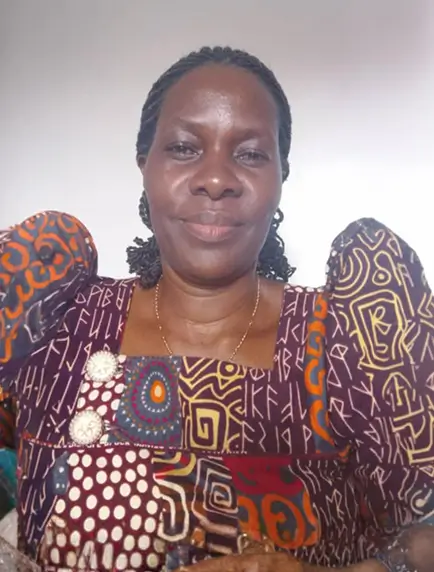
Baby carrying has been an integral part of African parenting traditions for generations, reflecting cultural values, community practices, and the close connection between caregivers and children. Traditional carrying methods, such as the lesu, ekikubiro, and engozi used in Uganda, represent valuable indigenous knowledge that continues to shape everyday caregiving.
Drawing on 20 years of experience in carrying and teaching baby carrying across Uganda, Ghana, and the Democratic Republic of Congo, this presentation explores the cultural significance, practical wisdom, and evolving role of baby carrying in African communities.
The presentation will examine how urbanisation, changing lifestyles, the growing popularity of prams, and the decline of intergenerational knowledge transfer are influencing traditional carrying practices. It will also highlight the importance of involving fathers in baby carrying as a way to encourage shared caregiving, strengthen parent-child relationships, and support maternal well-being.
Looking towards the future, the presentation will explore opportunities to preserve and revitalise traditional baby carrying practices through education, research, and the exchange of knowledge across cultures. It will also touch upon the potential for locally rooted initiatives and access to safe, affordable carriers to support families and create sustainable livelihoods.
Through personal stories, practical experiences, and examples of traditional African carrying cloths, this presentation invites participants to discover the richness of African baby carrying traditions and reflect on what they can teach us about caregiving, connection, and cultural heritage.
Josephine Nalugo holds a Bachelor of Arts in Social Sciences, majoring in Sociology, is a National Trainer in Infant and Young Child Feeding, and an Attachment Parenting Educator certified by Attachment Parenting International.
She is a Ugandan Mother and Baby Carrier Educator, Maker and Community breastfeeding Educator with 20 years of experience promoting safe, culturally rooted baby carrying across Uganda, Ghana and the Democratic Republic of Congo.
Her carrying journey began in the 1980s carrying her younger siblings, and deepened in 2004 when she became a mother. She is a specialist in traditional Ugandan carrying with lesu, ekikubiro and engozi, blending grandmother wisdom with modern ergonomic safety.
Josephine has taught thousands of mothers, fathers and communities on safe carrying, breastfeeding while carrying, and the role of carrying in infant attachment and emotional intelligence. She is a passionate advocate for father involvement in caregiving and for Africa as prime land for baby carrying research and for a sustainable market of African-made and international carriers that empower women. She is also an artisan creating African crafts, baskets and kitenge bags from local sustainable materials and grows living Xmas trees.

Coming soon…
I am Dr László Cs. Frank, Head of the Department of Orthopaedics at the Heim Pál National Paediatric Institute in Budapest.
I graduated from Semmelweis University of Medicine in Budapest in 1999 and completed my specialist training in orthopaedics and traumatology in Szeged in 2010.
I joined the Department of Orthopaedics at Heim Pál Children’s Hospital in 2009, where I currently serve as Head of Department.
Today, my clinical work focuses almost exclusively on paediatric orthopaedics. My main areas of interest include disorders of the hip and knee and their surgical treatment, as well as the diagnosis and conservative treatment of scoliosis. I also have a particular interest in the diagnosis and treatment of rare orthopaedic conditions.
Muscle function plays a fundamental role in early development and can influence multiple aspects of a baby’s well-being and quality of life, including posture, feeding, breathing, sleep, and overall motor development. From this perspective, baby carrying is much more than a practical way of carrying a baby from one place to another. When used appropriately, it can become a gentle, everyday form of supportive therapy, providing beneficial sensory, postural and myofunctional input while promoting regulation, interaction and connection.
These benefits are not limited to babies with specific conditions or developmental challenges. Healthy babies can also benefit from appropriate carrying, as it supports their natural developmental journey.
I will introduce the concept of “The Blossoming Baby” – a vision of the first year of life as a gradual process of development, from the first delicate bud at birth to a fully blossomed flower at one year of age. Each stage brings new functional and postural possibilities, and the way we support the baby’s body along this journey may influence how naturally these abilities unfold.
In this context, baby carrying can be seen as “myotherapy in motion” – a gentle, accessible approach that integrates movement, posture, muscle function and closeness into everyday life. The presentation will explore how thoughtful baby carrying can support oral and overall function while respecting each baby’s individual developmental needs.
I am a physician specialized in Clinical Pharmacology and Toxicology and currently a Family Medicine resident. Over the years, my professional interests have increasingly focused on infant feeding, oral function and early development.
I am an International Board Certified Lactation Consultant (IBCLC) and a myofunctional therapist, and I have continued my professional training in myofunctional therapy, pediatric osteopathy and the management of infant feeding difficulties. I am also a member of the International Board Certified Infant Carrying Consultants (IBCICC).
My current areas of interest include infant nutrition and feeding, oral function, myofunctional approaches and evidence-based care. I have had the opportunity to present internationally on topics related to myofunctional therapy and infant feeding, and I have also published on tongue-tie, including its development, evolution and treatment.
This lecture examines baby carrying through a psychological lens, considering how close physical and emotional contact influences the developing parent–infant relationship and contributes to the wellbeing of both child and parent. Beyond the parent–infant dyad, we will explore how cultural contexts, societal pressures, and the increasing pace of modern life shape the ways we parent and connect. Drawing on psychological theory, research, and anthropological insights, the lecture examines how simple practices such as baby carrying, together with clear and compassionate support for parents, can foster resilience, presence, and deeper connection within families and communities.
Urška Podvršič is a mother of two daughters, a psychologist, the author of An Ode to Connection: A Mother’s Journey of Bonding, Re(dis)covery and Belonging, a baby carrying specialist and educator with Die Trageschule Dresden, a lifelong seeker and learner, and a few other things, exploring life with curiosity, compassion, and a wink of humor.
After completing her studies, she focused on animal-assisted therapy and child and adolescent psychology. However, the birth of her first daughter drew her into the beautiful world of baby carrying and early connection. Through her work with children from challenging backgrounds, while raising her own children and experiencing the realities of parenthood firsthand, she began questioning what infants, children, and ultimately all humans need to truly thrive. This journey led her to support parents through baby carrying, which became a gateway to exploring the broader aspects of nurturing children, strengthening families, and fostering connection in today’s world.
This talk will explore how skin-to-skin contact, baby carrying and in-arms carrying support connection, breastfeeding and elimination communication.
Through a poetic lens, it will invite participants into babies’ subtle communication and the instinctive behaviours triggered and supported by touch.
Ulrika Casselbrant is a baby carrying consultant and Certified Breastfeeding Specialist. She is the author of books on baby carrying, breastfeeding and Elimination Communication, including Babywearing and In-arms Carrying (2022) and A Little Book About Breastfeeding in the NICU (2023), a resource used in neonatal care and translated into multiple languages.
Ulrika works as a NICU nurse assistant at Karolinska University Hospital in Sweden and is involved in education, quality improvement and the development of breastfeeding and feeding support in neonatal care. Her special interests include Kangaroo Care, Family-Centered Care and infant communication. She also holds a Master’s degree in Fine Arts.
In human childrearing, carrying an infant on one’s body—holding in the arms and carrying on the back, or babywearing—is a practice that has developed in its own way across the world, bound up with each region’s daily life, labour, climate, and tools. In Japan, onbu (a high back carry) has long been widely used as a way of combining work and everyday life with childcare on one and the same body, and tools suited to the local environment have been devised—such as the mokko of Amakusa in Kumamoto, or the kooi-obi (child-carrying sash) of Izumo. These take forms different from those of other regions, yet each is one shape of childrearing’s adaptation to the environment of its society.
In this lecture, I approach Japanese holding and onbu from the standpoint of ecological psychology—the reciprocal exchange between perception and environmental information. First, drawing on continuous 24-hour behavioural records of contemporary households (firstborn newborns), I show how an infant spends a substantial part of the day in someone’s arms, and how, within the flow of evening life, family members pass the infant from one to another—what I will call the “relay of holding”—so that a shared, collaborative form of care takes shape. Second, through motion analysis, I show how differences in the structure of carrying tools, and in the freedom afforded by cloth, give a certain range to the closeness, the movements, and the direction of gaze between caregiver and infant.
What these data show is not an infant who is merely carried, but one who—supported by the caregiver’s body and by tools—shares in the caregiver’s movements and postural adjustments, and actively picks up information from the environment. In particular, the onbu arrangement of “looking the same way” over the caregiver’s shoulder bodily creates a place in which caregiver and infant share the world.
Babywearing—through which an infant comes to engage with several caregivers within the home, and to perceive the environment from the same viewpoint as the caregiver—is, for the infant, more than a means of transport. It can be understood as a first step into society: becoming aware of a world shared with others, beginning with the family, and actively joining it.

Baby carriers sit at the intersection of infant care, ergonomics, textile design, safety standards and parenting culture. Yet the processes behind their development often remain largely invisible to both consumers and babywearing professionals. Who designs these products? Where are they manufactured? How is safety assessed? And whose expertise shapes their development?
This exploratory study investigates the contemporary babywearing industry through structured interviews with companies exhibiting at Kind + Jugend 2026 in Cologne, Germany, both as in-person interviews and per email follow-up with the participants who could not be reached during the fair. The research includes specialist brands, family-owned businesses, start-ups, international companies and OEM/ODM manufacturers, covering a range of carrying products, from wraps and ring slings to structured carriers and hip seats.
The interviews explore four key areas: product development and manufacturing, supply-chain transparency, independent safety testing and certifications, and the involvement of parents, babywearing professionals and healthcare practitioners.
Particular attention is given to understanding when and how professional expertise contributes to product development, as well as who takes responsibility for educating and supporting families after purchase.
By looking beyond consumer-facing brands, this research aims to offer a clearer picture of the industry’s structure, practices and priorities, while opening a broader conversation about transparency, professional collaboration and the future of babywearing.”
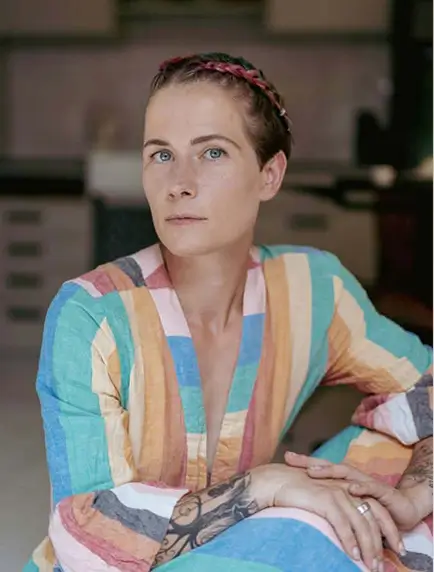
Chiara Venturoli is an Italian babywearing professional, educator and trainer with over a decade of experience working with families, healthcare professionals and the babywearing industry.
With a degree in Law and an extensive professional background in Human Resources and Customer Care, she brings a multidisciplinary perspective to her work, combining practical babywearing expertise with an interest in product development, professional education and the relationship between brands and consumers.
She is currently pursuing a second degree, taught in English, at University of Padova, expanding her knowledge of psychology, intercultural relations and research methodologies.
As a mother of four, now teenagers and young adults, her personal experience has also deeply informed her approach to supporting families and training professionals.
Her work focuses on building meaningful connections between families, babywearing professionals and manufacturers, encouraging informed choices, professional collaboration and a more transparent, responsible babywearing industry.”
Can we harm a baby’s motor development by carrying them a lot? As a baby carrying consultant, you have almost certainly heard this question from parents, and perhaps you have asked it yourself. In this workshop, we will look for the answer together.
For a long time, closeness and free movement seemed like two separate worlds, even contradictory ones. This contradiction would not leave me alone, and one of the most important results of my professional work is that I have found a way to resolve it, both in theory and in practice. Using videos of babies on the move, we will explore how the two are connected and what role baby carrying plays in motor development. In the end, it becomes clear that baby carrying and free movement belong closely together, and that together they give babies what they need to develop. And so that all this does not remain theory: I will show you a simple but often overlooked detail that can make a significant difference both in baby carrying and in a baby’s movement. By drawing parents’ attention to it, you can support them in an easy and effective way as a baby carrying consultant.
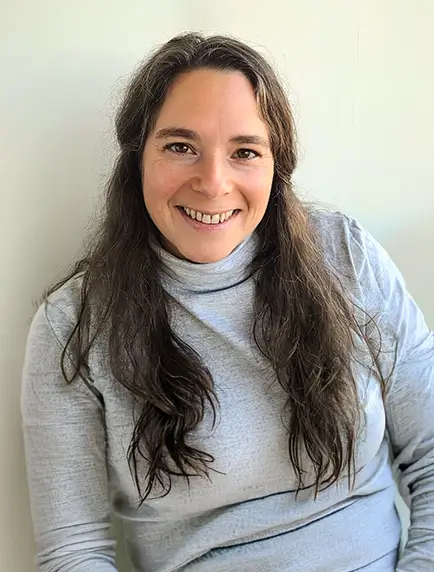
Ági Ónodi is a biologist and an expert in babies’ free movement who has been working in the field of baby carrying for twenty years. In 2006 she founded Hordozóház, a baby carrying school in Budapest, and in 2008 she launched its baby carrying consultant training, from which more than 200 consultants have graduated so far. For her, the Pikler approach to free movement is a family legacy: her grandmother was a personal student of the Hungarian paediatrician Dr Emmi Pikler, and Ági later deepened her knowledge through training at the Pikler Institute in Budapest. She has brought baby carrying and free movement into harmony, in theory and in practice, so that parents can take both home as everyday solutions that work well. To achieve this, she has drawn on three pillars: the professional literature; collaboration with special needs and conductive educators, physiotherapists and paediatricians; and the observation of the movement of many hundreds of babies.
Today, alongside leading the baby carrying consultant training, she supports families as a motor development and parenting consultant. Whatever topic she teaches, her work is always guided by strengthening parents’ sense of competence and their resilience to shame. She is a nonviolent communication trainer and mediator, and the mother of four.